Try this before you read on. Stand up from your chair, then sit back down, five times, arms crossed, as fast as you safely can. Easy, or harder than you expected? Write down how it felt. In 30 days you are going to do it again, and the difference is the whole point of this plan.
Every January, people over 50 make the same quiet decision: this is the year I get back on track. And every January, plenty of them skip the big resolution altogether, because they have tried that before. On one long-running New Year thread for older adults and family carers, one reader’s whole resolution was simply:
To NOT make resolutions and set myself up to fail.
A reader on AgingCare’s “Happy New Year. What are your RESOLUTIONS?” thread
This plan is for that person. It is not a 6am boot camp or a diet. It is 30 days of small steps, built around four things people in their 50s and 60s keep naming when they talk about feeling better: walking, sleep, strength and energy. You measure where you start, you tick off each day, and you measure again at the end.

Why basics beat hacks after 50
In a popular January 2026 thread, one person summed up a whole year of trial and error in a single line: they stopped chasing anti-aging hacks and focused on basics, “better sleep, healthy food, regular movement, deep breathing, mindful breaks, and staying socially connected.” A 66-year-old in the replies explained what keeps them going:
I have a labrador and walk him twice a day, 3 times on weekends… I think what makes me feel the best is weight lifting and core work. I am strong and it makes me feel good, when I slack off a bit, I start to feel tired and achy so I make myself do something everyday.
A 66-year-old on Reddit’s r/Aging, January 2026
That is the shape of this plan: one small daily habit, a weekly focus, and a way to see that it is working. This is not medical advice; if you have a health condition or take regular medicines, check with your doctor before changing your exercise or adding a supplement.
Day 1: measure your starting point (10 minutes, free)
Before you change anything, take four quick readings and write them on paper or in your phone. These are your “before” numbers.
- Your biological age estimate. Open the free Biological Age Calculator, answer the questions honestly, and note the result. It is an estimate based on everyday habits, not a lab test, which is exactly why it is useful here: as your habits change, you can see the estimate respond.
- Your leg strength. Do the 30-Second Chair Stand Test and count your full stands.
- Your balance. Try the 4-Stage Balance Test, with a counter or wall within reach.
- Your habit tracker. Open the free Health Habits Tracker and add four daily habits: walk, sleep window, strength (on your strength days), protein at breakfast.
That is it for day 1. No new gear, no new diet.
Week 1 (days 1 to 7): walk 10 minutes a day
Start with 10 minutes of walking every day, ideally after a meal. If you already walk, add 5 minutes or a slightly brisker pace. A 62-year-old shared his own New Year goal on X in January: “walking 18 holes 5 days a week.” You do not need 18 holes. You need a door and 10 minutes. If you like numbers, our guide to how many steps a day after 50 and the walking speed check help you set a realistic target. Want company on the walk? The MabelWalks channel on YouTube posts easy city walks you can follow along with: MabelWalks.
Tick it off in the tracker every day you walk.
Week 2 (days 8 to 14): fix your sleep window
Keep walking, and add one sleep habit: go to bed and get up at roughly the same time every day, weekends included, and put screens away 30 minutes before bed. A 61-year-old who already runs and lifts put it plainly when asked about his goals: the areas he still needed to improve were “sleep and better attention to diet.” If you wake tired, our pieces on magnesium and sleep after 50 and what a 12-week NMN trial found about sleep are worth a read.
Week 3 (days 15 to 21): two short strength sessions
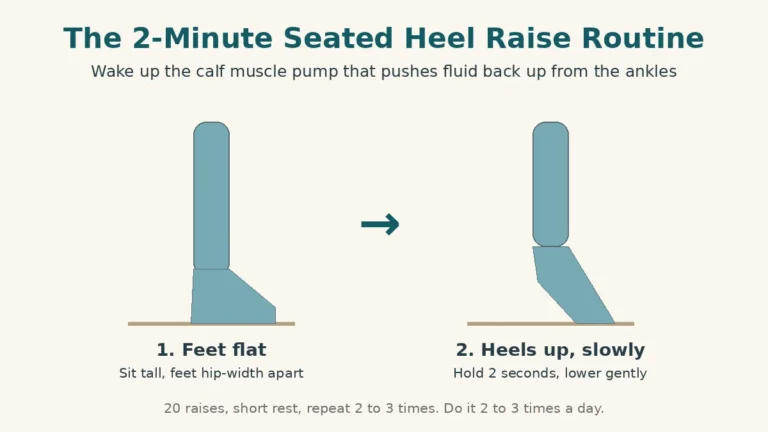
Keep walking and sleeping on schedule, and add two 10-minute strength sessions this week. Simple is fine: 2 sets of sit-to-stands from a chair, wall push-ups, and standing heel raises holding a counter. Leg strength is one of the habits most closely linked with staying independent as we age, and it is the one people notice fastest when they stop.
Week 4 (days 22 to 30): fuel and energy
Keep everything going and add protein at breakfast: eggs, Greek yogurt, cottage cheese, beans or fish. This is also the week to look honestly at your energy. Our free energy check takes two minutes and helps you see which habits are pulling your energy down.
Optional: is NMN worth adding to your restart?
For many people over 50, the New Year is when they finally look into longevity supplements, and NMN (nicotinamide mononucleotide) is one of the most popular. Your body uses NMN to make NAD+, a molecule cells rely on for energy and repair, and NAD+ levels tend to fall with age. Small human trials have found that NMN raises NAD+ in the blood and appears well tolerated over a few months, with some hopeful early signals for walking speed and sleep quality. It has not been proven to slow aging, and long-term effects are still being studied.
So treat NMN as an optional extra on top of the plan, never instead of it. If you are curious, talk to your doctor first, then compare tested brands, doses and cost per day in our side-by-side comparison of the best NMN supplements in 2026. Our short guides on how to choose an NMN supplement after 50 and reading an NMN certificate of analysis help you avoid copycat bottles. A nice bonus: because you measured on day 1, you will have your own before-and-after numbers.

Day 30: measure again and compare
Repeat the four checks from day 1: re-take the Biological Age Calculator, the chair stand, the balance test, and count your streak in the Health Habits Tracker. Then ask yourself one question: which habit made the biggest difference to how I feel? Keep that one for February, and add the next.
Myth or fact: “If I miss a day, the plan is ruined”
Myth. A streak with gaps still beats no streak at all. One reader in their 50s, asked what they would change, gave the best day-one advice we have seen: “do something, anything. A walk, ride, or even a good 10 minute stretch.” Miss a day, start again the next one.
Your 30-day restart at a glance
- Day 1: biological age estimate, chair stand, balance test, set up the tracker.
- Week 1: walk 10 minutes a day.
- Week 2: steady sleep window.
- Week 3: two short strength sessions.
- Week 4: protein at breakfast, energy check, optional NMN after a doctor chat.
- Day 30: measure again and keep your best habit.
Want the full picture behind these habits? Our free guide to living 7 years longer covers the simple daily routines that make the biggest difference after 50. Grab it before January 1 and start the year with a plan.
Disclaimer: TurnBackClock.com shares educational information for adults 50+. Nothing here is medical advice, diagnosis or a treatment plan. Talk to your doctor before starting a new exercise routine or any supplement, including NMN, especially if you take regular medicines, are being treated for cancer, or have a heart, blood pressure or balance condition.
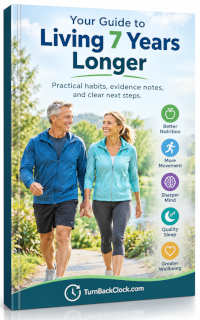
Get the Free Guide
Instantly receive Your Guide to Living 7 Years Longer — practical habits, evidence notes, and clear next steps. Soft mentions of our free longevity tools are inside. No miracle promises.
We’ll never share your email. You can unsubscribe anytime.
Frequently asked questions
What is a good 30-day health reset for someone over 50?
Keep it small and measurable: walk a little every day, keep a steady sleep window, add two short strength sessions a week and put some protein at breakfast. Check your biological age estimate, chair stand and balance on day 1, track your habits daily, and repeat the checks on day 30.
How do I measure my biological age at home for free?
Use the free TurnBackClock Biological Age Calculator. It takes a few minutes and gives an estimate based on everyday factors such as activity, sleep and habits. It is not a lab test, but it is a useful starting number to compare against on day 30.
Can my biological age change in 30 days?
Your estimate can move when the habits it asks about change, which is why re-taking it on day 30 is motivating. Treat it as a scorecard for your habits, not a medical measurement. Lasting change in health markers usually takes months of steady habits.
Should I take NMN as part of a New Year restart?
It is optional. NMN is one of the most popular longevity supplements for people over 50, and small human trials show it raises NAD+ in the blood and appears well tolerated over a few months. It is not a replacement for walking, sleep and strength. If you are curious, check with your doctor first and compare tested brands in our best NMN supplements guide.
What if I miss a day of the 30-day plan?
Just carry on the next day. The plan works on streaks, not perfection. Many people over 50 avoid New Year resolutions because they have failed big ones before, so this plan is built to survive a missed day.