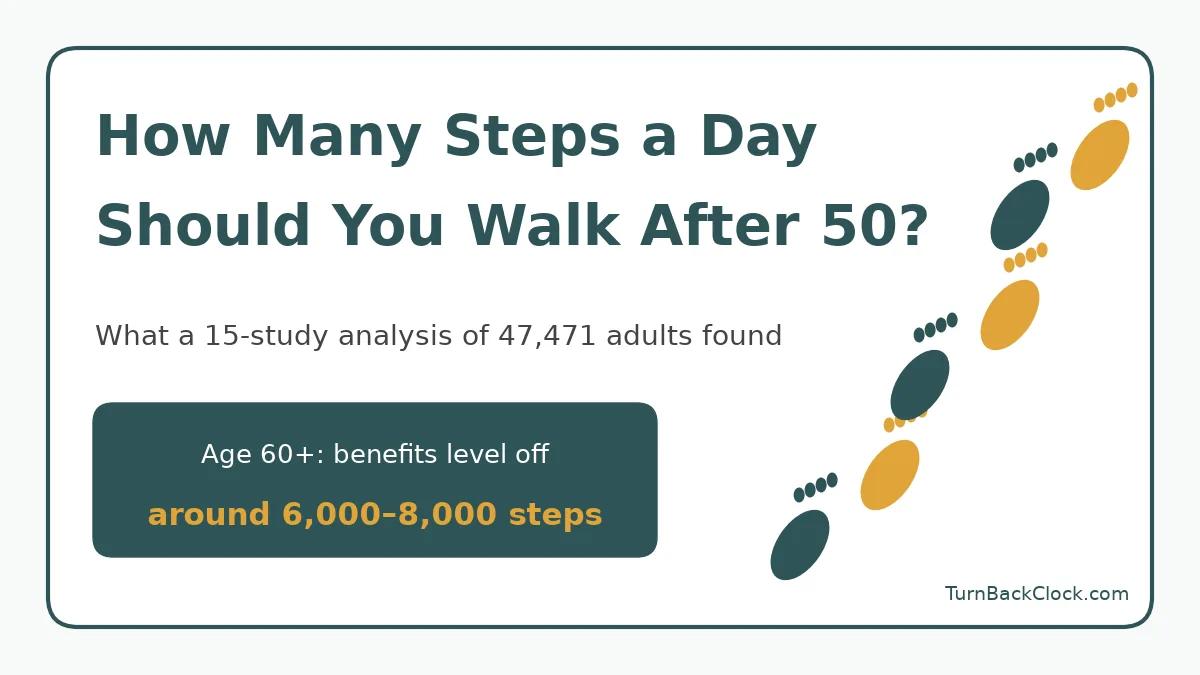
Short answer: if you are in your 60s or older, research suggests the biggest payoff comes from working up to roughly 6,000 to 8,000 steps a day. If you are in your 50s, the benefit kept climbing to about 8,000 to 10,000 steps. The famous “10,000 steps” is not a magic line—and if you walk 3,000 steps today, every extra 500 to 1,000 counts.
What the research found
A large 2022 meta-analysis in The Lancet Public Health pooled data from 15 studies and 47,471 adults who wore step counters and were followed for a median of about 7 years (Paluch et al., 2022, PubMed; free full text). Compared with the least-active group (about 3,550 steps a day), people averaging about 5,800 steps had a 40% lower long-term health risk during follow-up, about 7,840 steps 45% lower, and about 10,900 steps 53% lower.
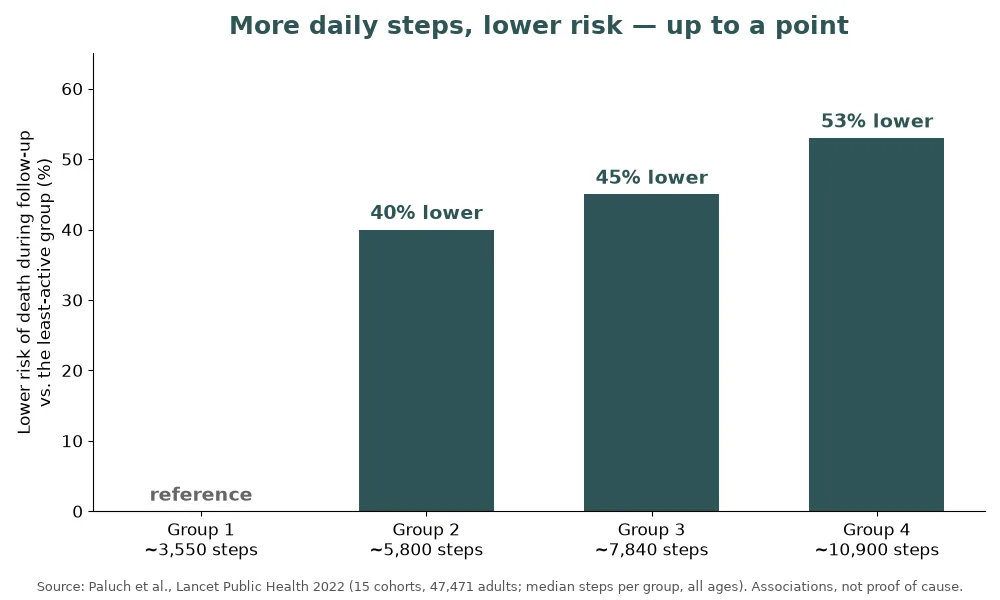
The most important detail for readers over 50: the curve was not the same at every age. Among adults aged 60 and older, risk kept falling as steps rose until about 6,000–8,000 steps a day, then levelled off. Among adults younger than 60, it levelled off at about 8,000–10,000. These are observational findings—they show a strong link, not proof that steps alone caused the difference.
What this means in your 50s, 60s and 70s
- In your 50s: a reasonable stretch goal is 8,000–10,000 steps on most days, built up gradually.
- In your 60s and beyond: about 6,000–8,000 steps is a realistic, evidence-based target. Going higher is fine if you enjoy it, but you do not need to chase 10,000 to benefit.
- If you are starting low (under 4,000 a day), the jump to around 5,000–6,000 is where the research saw some of the biggest differences.
Pace matters too, but you do not need to power-walk. The U.S. CDC’s guidance for older adults recommends at least 150 minutes a week of moderate activity—for example, brisk walking 30 minutes a day, 5 days a week—plus muscle-strengthening on at least 2 days and balance activities.
Get the Free Guide
Instantly receive Your Guide to Living 7 Years Longer — practical habits, evidence notes, and clear next steps. No miracle promises.
We’ll never share your email. You can unsubscribe anytime.
How to build up your steps safely after 50
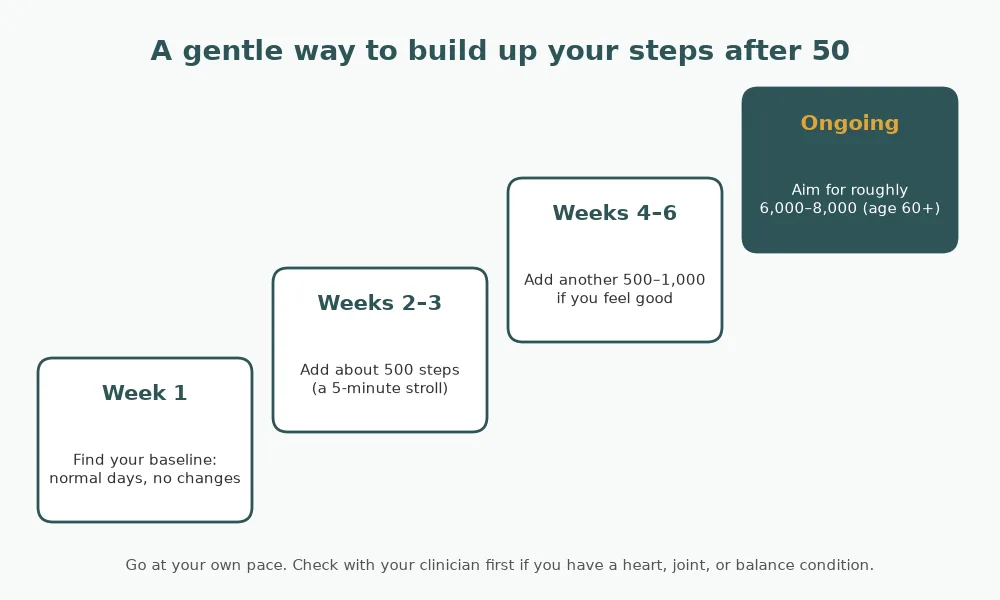
- Find your baseline. Wear your phone or a step counter for a week of normal days and note your average.
- Add about 500 steps. That is roughly a 5-minute stroll—after breakfast, a phone call on your feet, or parking a little farther away.
- Add more every week or two if your joints, feet and energy feel good. Comfortable, supportive shoes make a real difference.
- Split it up. Three 10-minute walks count just as much toward your daily total as one long one.
Are steps enough on their own?
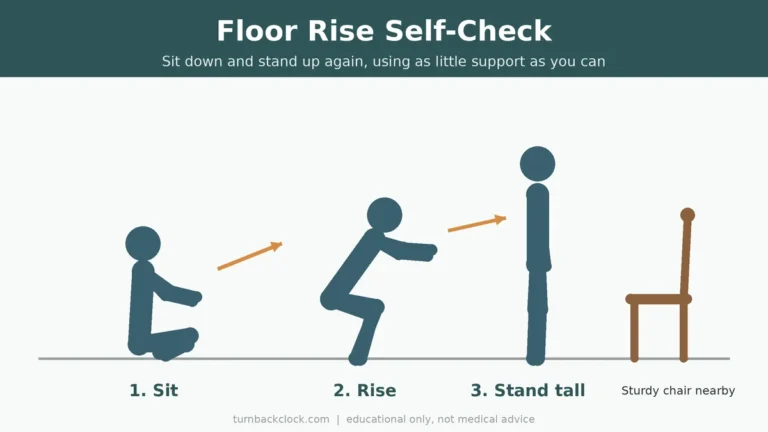
Walking is excellent, but after 50 your legs and balance need more than steps. Strong thighs and hips help you get out of a chair, climb stairs and steady yourself if you trip. Check your leg strength with the free 30-Second Chair Stand Test, see how often to practice balance exercises after 50, and read how to regain muscular strength after 50. Regular daytime walking may also support better sleep—see how much sleep adults over 50 need.
Want to keep a streak going? Log your daily walk in the free Health Habits Tracker, check your energy score, or browse all our free health tools.
When to check with a clinician first
Talk with your doctor before increasing your walking if you have chest pain or unusual shortness of breath with activity, a heart or lung condition, recent surgery, frequent falls or dizziness, or foot, knee or hip pain that gets worse when you walk. Stop and seek advice if something feels wrong—there is no prize for pushing through pain.
Medical disclaimer: This article is for general education only. It is not personal medical advice, diagnosis, or treatment. Step targets are general guides drawn from population research and may not suit everyone. Talk with a qualified clinician about your own health before starting or significantly changing an exercise routine, especially if you have medical conditions or take medications.