Full disclosure: this is TurnBackClock’s own book, written by Gary, the retiree behind this site. We’re proud of it, and we’ve tried to describe it honestly below.
Have you ever walked into a room and forgotten why you went in? Or stood at the kitchen counter wondering, “Did I already take my pills this morning?” If so, The 15-Minute Memory Routine for Seniors Over 60 was written with you in mind. It’s a short, gentle guide that swaps worry for a few simple daily habits. It’s written for readers over 60, but the habits work just as well if you’re in your 50s and want good systems in place early.
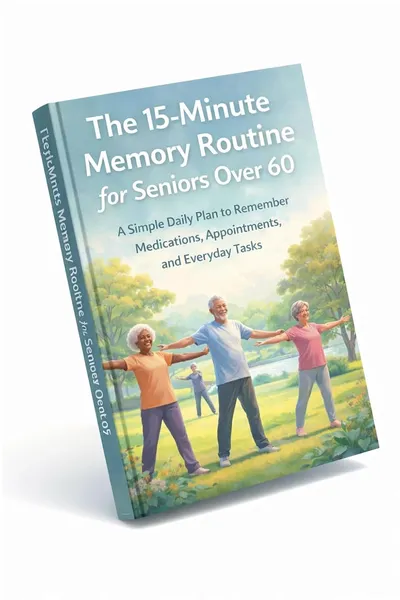
The 15-Minute Memory Routine for Seniors Over 60
A simple daily plan to remember medications, appointments, and everyday tasks. Kindle eBook, about 31 pages.
Get the Book on AmazonWhat the book is
The author is Gary, a 65-year-old retiree. He writes as a fellow traveller, not a doctor, and says so plainly. He started the book after his own memory slips: misplaced keys, names that vanished mid-conversation, and a doctor’s appointment he simply missed. He spent a long time reading, talking with other seniors and healthcare professionals, and testing what helped in his own life.
His big idea is reassuring. Most everyday forgetfulness, he argues, comes from divided attention, stress and busy routines, not a “failing” brain. So rather than hard brain workouts, the book gives you calm routines and reliable systems you can trust. It’s short (about 31 pages on Kindle) and written in plain, friendly language that’s easy to read.
What’s inside
The book moves in a clear order, chapter by chapter:
- You Are Not Alone. A warm opening on how common these slips are after 60, why the fear around forgetting can make memory worse, and how ordinary forgetfulness differs from serious illness. It also encourages you to talk to your doctor if you’re genuinely concerned.
- Why We Forget More After 60. Gary compares the younger mind to a sports car and today’s mind to a comfortable, reliable sedan: slower to start, but steady. He explains why attention matters more than “memory,” and how stress and worry can feed each other.
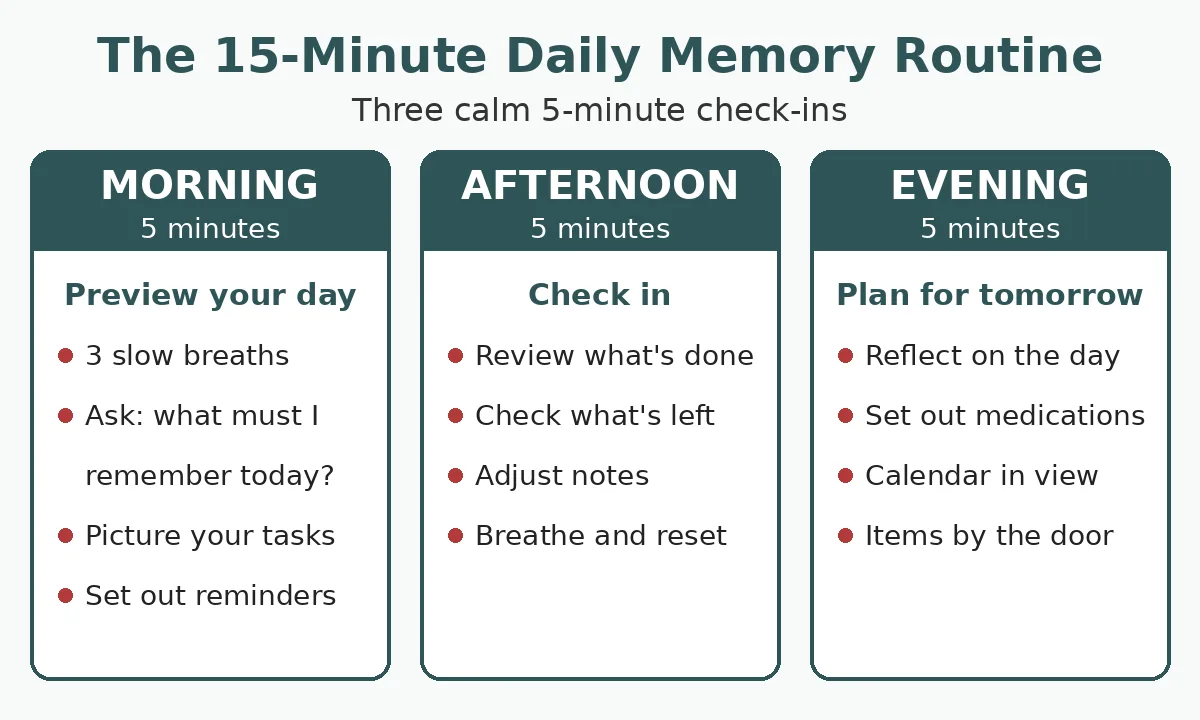
- The Daily Memory Routine. The heart of the book: 15 calm minutes a day, split into three 5-minute moments (more on this below).
- Never Forget Medications Again. Habit stacking (linking pills to coffee, lunch or brushing your teeth), visible pill organizers, and a simple way to check whether you’ve already taken a dose.
- Appointments, Names and Daily Tasks. One calendar system only, writing appointments down before you hang up the phone, easy name tricks, and the “Rule of Three” daily to-do list.
- Brain-Friendly Daily Habits. Short sections on gentle walking, drinking enough water, regular sleep, enjoyable mental activity and staying socially connected.
- A 14-Day Confidence Building Plan. Week one builds the daily routine; week two adds the medication, calendar and task systems.
- Free bonus tools. Links to our free Memory Companion reminder helper and the Memory Gym games.
The routine in brief
Morning (5 minutes): sit somewhere comfortable, take three slow breaths and ask, “What do I need to remember today?” Then picture your day like a short film: taking your medication, walking into an appointment, finishing one important task. Put physical reminders, such as keys by the door, where you’ll see them.
Afternoon (5 minutes): after lunch, look over what you’ve done (and give yourself credit), check what’s left and adjust your notes.
Evening (5 minutes): think back calmly on the day, then get tomorrow ready by setting out your medications, putting your calendar where you can see it and placing anything you need by the door.

Get the Free Guide
Instantly receive Your Guide to Living 7 Years Longer — practical habits, evidence notes, and clear next steps. No miracle promises.
We’ll never share your email. You can unsubscribe anytime.
What we like about it
- It’s genuinely kind. The book opens with reassurance before any technique. Gary’s point that the forgetfulness often isn’t the real problem, but the fear around it is, will strike a chord with many readers.
- It’s realistic. Fifteen minutes a day, three to-dos, one calendar. Nothing needs special equipment or an expensive program.
- It focuses on what worries people most. Medications, appointments and names get practical, step-by-step systems. The “did I already take it?” check (an empty organizer compartment, a ticked calendar or a dated sticky note) is a small idea that can bring real peace of mind.
- It’s honest about its limits. The book says clearly that it doesn’t diagnose or treat anything and sends readers to their doctor with real concerns.
- It’s quick to finish. You can read it in an afternoon and start the morning routine the next day.
If you like to understand the “why” behind memory changes, our guide to brain health after 50 pairs well with it. So does our look at hearing loss and memory after 50.
Who it’s for
This book suits you if you:
- Sometimes can’t remember whether you’ve taken your medication
- Worry about missing appointments or losing track of daily tasks
- Feel embarrassed or anxious about everyday memory slips
- Want gentle structure that helps you stay independent
- Are an adult child looking for a thoughtful, encouraging gift for a parent
It’s less suited to anyone looking for detailed science, brain-training drills or medical guidance. It’s a practical, encouraging handbook, not a medical text.
How to get started
Gary’s own advice is to start with just one thing. A simple way to begin:
- Tomorrow morning, try the 5-minute preview with your coffee or tea.
- Put your pill organizer where you’ll see it, next to the kettle or coffee pot.
- Write down only three tasks for the day.
- Follow the book’s 14-day plan: the routine first, then the extra systems.
Be patient with yourself. In Gary’s words, memory confidence “isn’t about perfection.”
Explore more free memory tools, games and guides in our Memory Hub.
Frequently asked questions
How long is the book?
It’s a short Kindle eBook, about 31 pages, written in clear, plain language that you can read in one sitting.
Do I need any equipment or apps?
No. A pill organizer, a calendar and a notepad are enough. The free online Memory Companion and Memory Gym are optional extras.
I’m in my 50s. Is it still useful?
Yes. The book is written for readers over 60, but the habits (calm planning, one calendar, medication anchors) are useful at any age.
Will it prevent dementia?
No, and it doesn’t claim to. It’s about managing everyday, normal forgetfulness with routines and systems. If you’re concerned about your memory, please talk to your doctor.
Please note: This review is for education only and isn’t medical advice. If you or a loved one notices memory changes that worry you, talk to a doctor. Many causes of memory problems can be checked and treated.