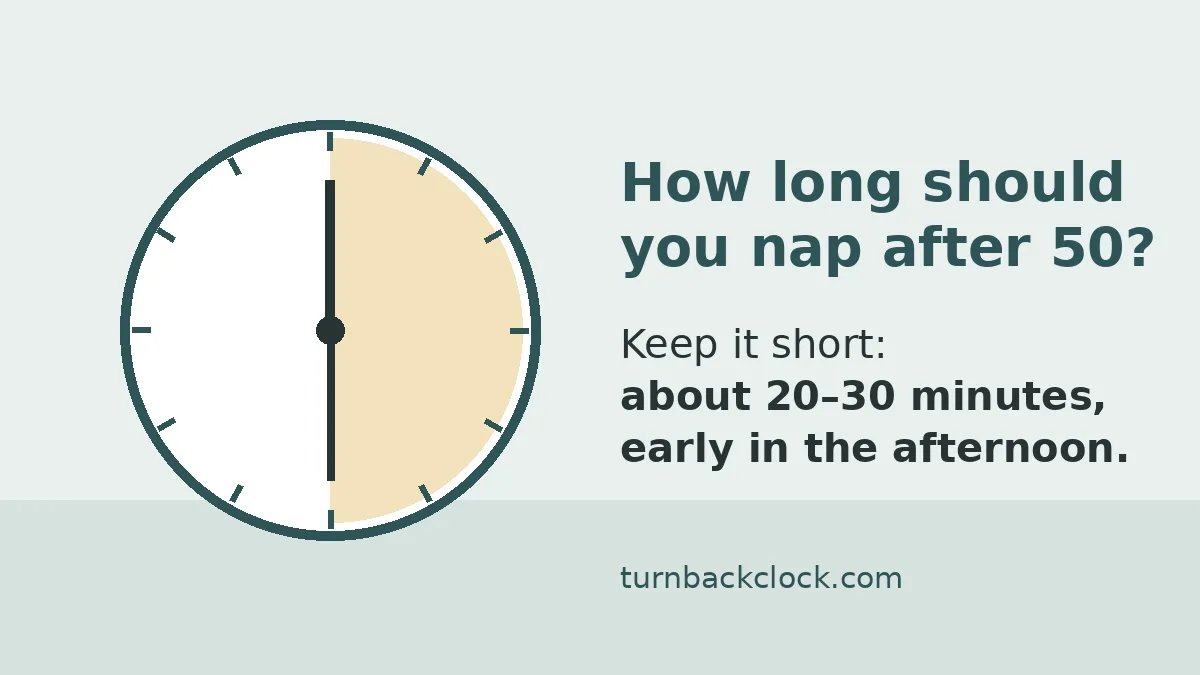
Short answer: for most adults over 50, a nap of about 20 to 30 minutes, taken in the early afternoon, is the sweet spot. Research on habitual nappers found no significant added health risk with naps under 30 minutes, while regular naps of 30 minutes or longer were linked with higher long-term health risk. Late-afternoon and evening naps are best avoided because they can make it harder to sleep at night.
What the research says about nap length
A 2024 meta-analysis in Sleep Medicine Reviews pooled 44 cohort studies covering more than 1.8 million people with an average age of about 56 (Yang et al., 2024, PubMed). People who regularly napped 30 minutes or longer had a higher risk of cardiovascular disease, metabolic disease and other long-term health problems. Those whose naps lasted less than 30 minutes showed no significant added risk. The authors concluded that people who nap for a long time should consider shortening their daily nap to 30 minutes or less.
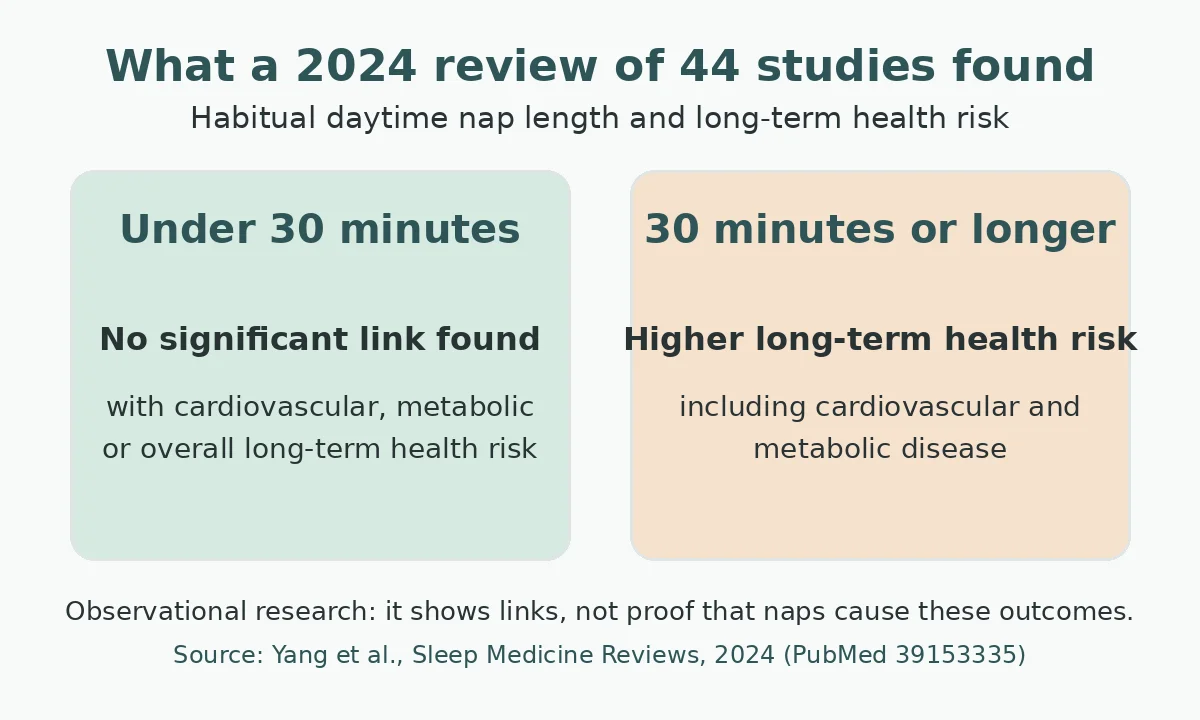
These are observational studies. They show a link, not proof that long naps cause these problems. Often the long nap is a sign of something else, such as poor night-time sleep, low activity, or an untreated health issue.
Why naps tend to get longer with age
A study that tracked 1,401 older adults for up to 14 years with wrist activity monitors found that people naturally napped longer and more often as they aged (Li et al., 2023, Alzheimer’s & Dementia). Longer and more frequent daytime naps were linked with a higher risk of later memory decline, and the link seemed to run both ways: worsening memory was also followed by more napping. That does not mean a nap harms your brain. It does mean that a big, unexplained jump in daytime sleepiness is worth mentioning to your doctor.
After 50, night-time sleep often becomes lighter and more broken, which can leave you tired in the afternoon. If that sounds familiar, our guide on how much sleep adults over 50 need and our tips for better sleep after 50 are good next reads.
Get the Free Guide
Instantly receive Your Guide to Living 7 Years Longer — practical habits, evidence notes, and clear next steps. No miracle promises.
We’ll never share your email. You can unsubscribe anytime.
How to nap well after 50
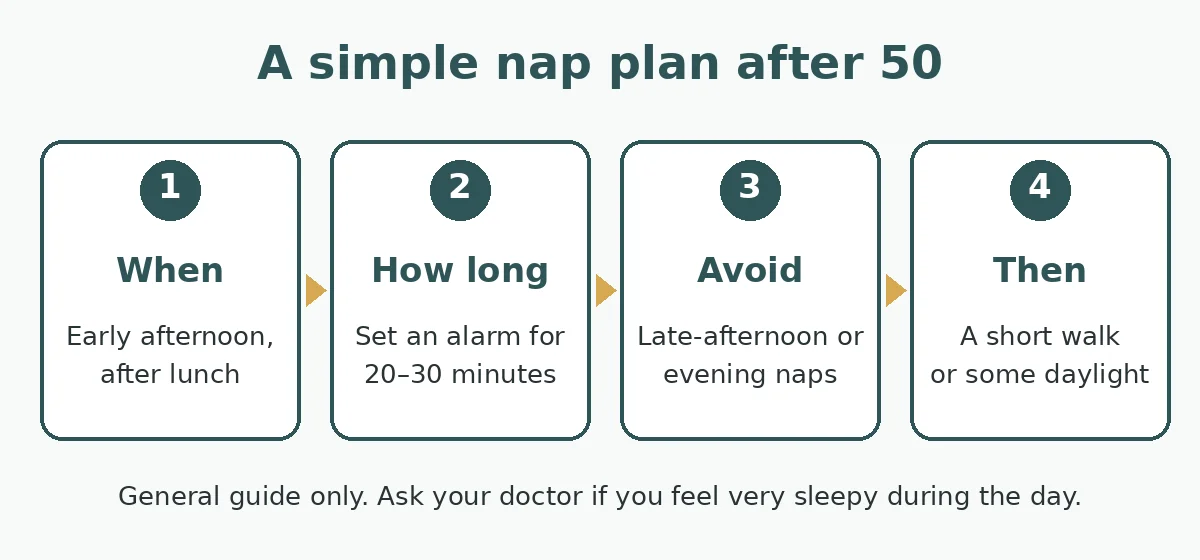
- Nap early in the afternoon. Shortly after lunch is a natural dip for many people. The U.S. National Institute on Aging advises older adults to avoid napping in the late afternoon or evening.
- Set an alarm for 20 to 30 minutes. Lying down for 20 minutes usually means a short, refreshing rest rather than deep sleep that leaves you groggy.
- Keep it comfortable but not too cozy. A recliner or sofa in a quiet room often works better than getting fully into bed.
- Get moving afterwards. A short walk or a few minutes of daylight helps you shake off sleepiness. Every bit of daytime activity counts; see how many steps a day to walk after 50.
- Skip the nap if nights are a struggle. If you have trouble falling or staying asleep at night, try going without a nap for a week or two and see whether your night-time sleep improves.
Want to see whether a short nap is helping? Log your naps and bedtimes in the free Health Habits Tracker, check your Energy & Vitality Score, or browse all our free health tools.
When daytime sleepiness needs a doctor’s check
Talk with your doctor if you need long naps every day, if you fall asleep without meaning to (for example while reading, watching TV or driving), if your partner notices loud snoring or pauses in your breathing, or if your sleepiness came on suddenly. Medicines, sleep apnea, low mood, thyroid problems and other treatable conditions can all cause heavy daytime tiredness. Never drive when you feel drowsy.
Medical disclaimer: This article is for general education only. It is not personal medical advice, diagnosis, or treatment. Nap guidelines here are general guides drawn from population research and may not suit everyone. Talk with a qualified clinician about your own sleep and health, especially if you have medical conditions or take medications.