Most adults over 50 still need roughly 7 to 9 hours of sleep in a 24-hour period—not far less just because they have more birthdays. Sleep patterns often shift with age (earlier bedtimes, lighter sleep, more night awakenings), but the need for restorative sleep stays real. If you regularly get under about 7 hours and feel foggy, low-energy, or irritable, that is worth paying attention to.
What the guidance actually says
Public health guidance for adults is clear that sleep is not optional “nice to have.” According to the U.S. Centers for Disease Control and Prevention (CDC), recommended nightly sleep is:
- Adults 18–60: 7 or more hours
- Adults 61–64: 7–9 hours
- Adults 65+: 7–8 hours
In plain English: after 50, aim for a solid night in that 7–9 hour neighborhood, and notice how you feel the next day. Hours in bed that leave you unrested may mean quality (interruptions, apnea, pain, medications) matters as much as quantity.
Why sleep can feel shorter after 50
Many people notice they fall asleep earlier, wake earlier, or stir more overnight. That can be normal aging of sleep architecture—and it can also be driven by caffeine timing, late screens, alcohol, nighttime bathroom trips, stress, or medical issues. The goal is not “perfect sleep every night.” The goal is enough total rest, most nights, so daytime energy, mood, balance, and memory stay steadier. For more on how sleep fits with memory and thinking, see how to improve brain health after 50.
Get the Free Guide
Instantly receive Your Guide to Living 7 Years Longer — practical habits, evidence notes, and clear next steps. No miracle promises.
We’ll never share your email. You can unsubscribe anytime.
Practical ways to protect your 7–9 hours
- Keep a steady bedtime and wake time, including weekends when you can.
- Dim screens and bright lights in the last 30–60 minutes before bed.
- Move caffeine earlier in the day; skip late large meals and evening alcohol if they disrupt you.
- Keep the bedroom cool, dark, and quiet enough for you.
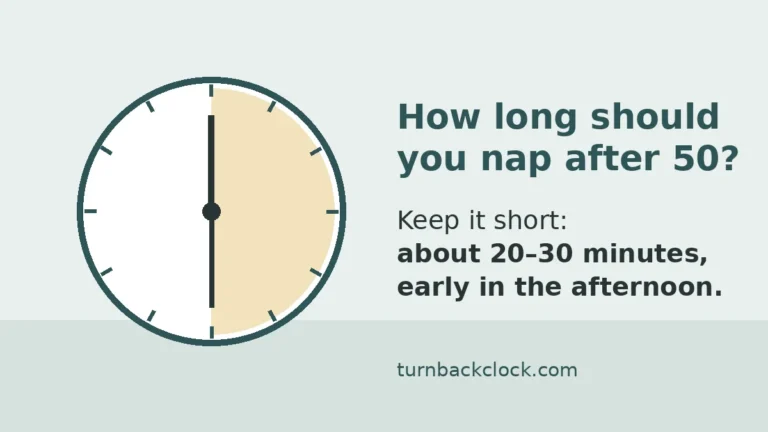
- If you nap, keep it short and early: see how long you should nap after 50.
- Track how you feel: energy, mood, and focus often reveal under-sleep faster than the clock alone. The free Energy & Vitality Score and Health Habits Tracker on TurnBackClock can help you notice patterns.
For a fuller how-to on bedtime routines and common sleep disruptors after midlife, see How to Sleep Better After 50. More free tools live on our Free Longevity Tools page.
If leg cramps are cutting your nights short, see what helps night leg cramps after 60, including a simple stretch to do just before bed.
Separate from sleep hygiene, early research on NMN has also measured sleep questionnaire scores in older adults — see our evidence summary on NMN, energy, muscle, and sleep after 50 if you want the cautious read.
When to talk with a clinician
Bring sleep up with your doctor or a sleep clinician if you snore loudly, gasp, choke, or stop breathing at night; feel exhausted despite “enough” hours; have restless legs; or insomnia lasts weeks. Those are clues, not diagnoses—and they deserve a real conversation, not guesswork.
Medical disclaimer: This article is for general education only. It is not personal medical advice, diagnosis, or treatment. Sleep needs and sleep disorders vary. Talk with a qualified clinician about your own health before making major changes, especially if you have medical conditions or take medications that affect sleep.