“Isn’t this just a study against DHA, not both DHA and EPA?” That was one of the first replies when news of a new brain study hit Reddit this week, and you could feel the worry behind it. Many of us keep a bottle of fish oil by the kettle for one reason: to keep our memory sharp. In the United States alone, the CDC says 21.8% of adults aged 60 and over take an omega-3 supplement. So when a two-year trial found no memory benefit, it is fair to ask what it really means for you. Here is a calm, plain-English look at fish oil for memory after 60: what was tested, what was found, and what to do next.
What the two-year study actually tested
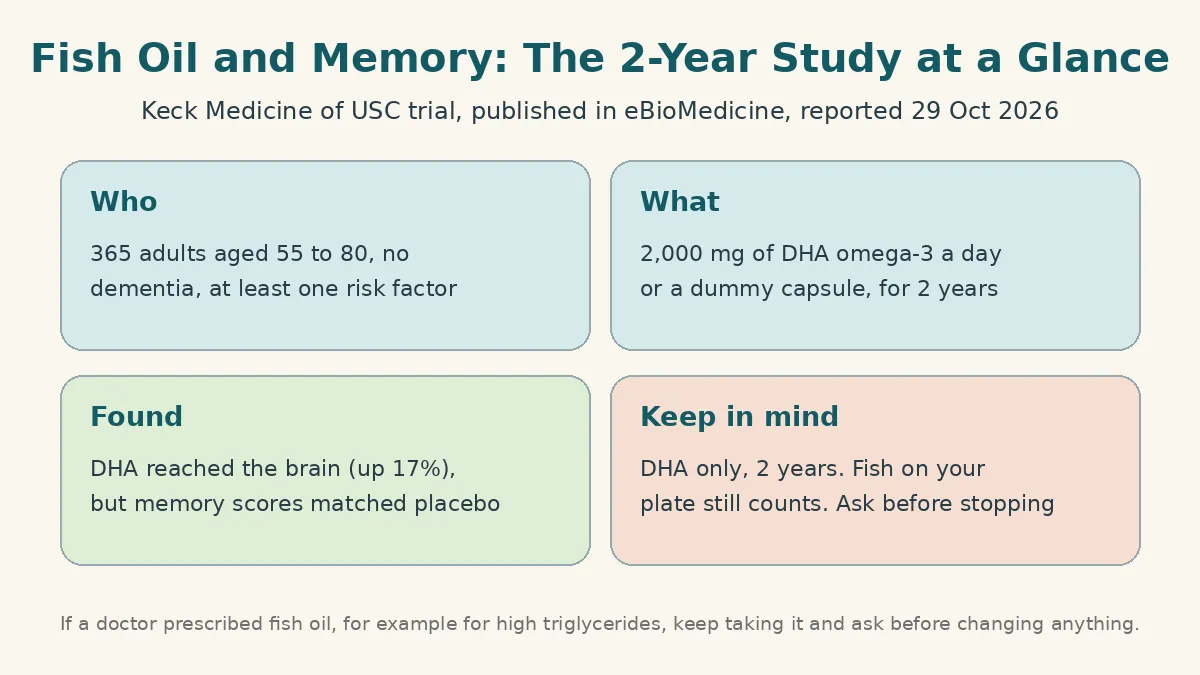
The research was led by Keck Medicine of USC, published in the journal eBioMedicine and reported by Healthline on 29 October 2026. The team enrolled 365 adults aged 55 to 80, average age 66. None had dementia, all ate little DHA, and each had at least one risk factor for memory problems. Nearly half carried the APOE4 gene variant, which is linked with a higher Alzheimer’s risk.
Half took 2,000 mg of DHA every day, and half took a dummy capsule. Neither the volunteers nor the researchers knew who had which. One detail matters: the capsule was more than 90% DHA with only about 1% EPA, and it was not actually made from fish. So this tested high-dose DHA, not the typical fish oil capsule with its mix of EPA and DHA.
What they found, in plain numbers
- The DHA got into the brain. Levels in the fluid around the brain and spinal cord rose by 17%.
- Blood levels soared. The omega-3 index, a measure of EPA and DHA in red blood cells, climbed from 4.9% to 11%.
- Memory did not change. Both groups scored about the same on memory and thinking tests, and brain scans looked the same too.
- The gene made no difference to delivery. DHA reached the brain just as well in people with and without APOE4.
As lead researcher Dr. Hussein Yassine put it: “That’s a massive increase, but that doesn’t translate into clinical outcomes.” Earlier trials could not tell whether DHA failed to reach the brain or reached it and did nothing. This one answers that: it got there, and memory still matched the placebo group.
Why getting into the brain isn’t the same as helping it
It is tempting to think more of a good thing must help. But the body is more complicated than a fuel tank. Dr. Yassine explained that the way your body uses omega-3s matters, and that obesity, smoking and too little exercise can all reduce how much reaches the brain in a useful way. Fish on your plate also brings other nutrients, such as vitamin E and selenium, that a single-nutrient capsule does not.
“A supplement can raise the level, but if you don’t change the holistic program, just going and increasing the level by itself may not be sufficient,” he said.
What this study does not tell you
- It tested DHA only. Most fish oil combines EPA and DHA, so the result may not apply to every capsule.
- Two years is short for the brain. Memory problems usually develop over decades, so a longer trial might show something different.
- About 1 in 3 dropped out. Of the 365 who started, 225 finished.
- It doesn’t mean fish is useless. Diets rich in fish are still linked with better brain health over time, and omega-3s remain important for the body.
Should you keep taking fish oil for memory after 60?
Here is a sensible way to think it through, without panic in either direction:
- Prescribed it? Keep going. If a doctor recommended fish oil for something else, such as high triglycerides, don’t stop on your own. Talk it over at your next visit.
- Taking it only for memory? Ask your doctor or pharmacist whether it is still worth the money for you. That is a fair question now.
- Don’t eat fish? Dr. Yassine said people who eat no fish, such as vegans, and people with very low omega-3 levels may still benefit. Some doctors can test your level, though it isn’t a routine test.
- Food first. Aim for fish, especially oily fish like salmon, sardines or mackerel, about twice a week. Flaxseed and walnuts add plant omega-3s.
- Check the bottle. One reader noted capsules can go rancid if stored badly. A strong fishy smell or taste is a sign to replace them. Keep them cool and away from sunlight.
What does help a memory stay sharp
Dr. Dung Trinh, a doctor quoted in the coverage, tells his patients that “what is good for the heart is generally good for the brain.” His list is refreshingly practical: about 150 minutes of moderate activity a week plus some strength work, 7 to 9 hours of sleep, a Mediterranean or MIND style diet that includes fish, keeping blood pressure, cholesterol and blood sugar in check, staying mentally and socially active, and getting hearing and vision checked.
The mentally active part is the easiest to start today. If you’d like a simple daily plan, our review of the 15-Minute Memory Routine for Seniors walks through a short brain workout you can do with your morning coffee, no pills required.
And for more small habits that support your brain and body after 50, from sleep to strength to eating well, download our free healthy aging guide.
This article draws on the Keck Medicine of USC DHA trial published in eBioMedicine, as reported by Healthline (29 October 2026), with CDC survey figures quoted in that report.
This article is for general information only and is not medical advice. Please speak with your doctor or pharmacist about your own health, especially before starting, stopping or changing any supplement or medicine.
Get the Free Guide
Instantly receive Your Guide to Living 7 Years Longer — practical habits, evidence notes, and clear next steps. Soft mentions of our free longevity tools are inside. No miracle promises.
We’ll never share your email. You can unsubscribe anytime.
Frequently asked questions
Does fish oil help memory after 60?
A new two-year trial of 365 adults aged 55 to 80 found that a high daily dose of DHA, one of the omega-3s in fish oil, did not improve memory, thinking skills or brain structure compared with a dummy capsule. Eating fish as part of a healthy diet is still linked with better long-term brain health.
Should I stop taking my fish oil?
Not on the strength of one study. If a doctor prescribed fish oil for another reason, such as high triglycerides, keep taking it and talk it over with them first. If you take it only for memory, ask your doctor or pharmacist whether it still makes sense for you.
Who might still benefit from an omega-3 supplement?
The lead researcher suggested people who eat no fish, such as vegans, and people whose omega-3 levels test very low may still benefit. Researchers are still working out who responds best.
What helps memory most after 60?
The doctors quoted in the coverage pointed to regular activity including strength work, 7 to 9 hours of sleep, a Mediterranean or MIND style diet with fish, managing blood pressure and blood sugar, staying mentally and socially active, and checking hearing and vision.