“I’ve tried so many different gummies and they seem to help at first but then I become resistant to them… Any good gummies you’d recommend?” A woman in her sixties asked that on an online forum for women over 60 this month, after a sleep study had already ruled out sleep apnea. Dozens of replies poured in, swapping THC, CBN, glycine and magnesium tips. One reader even said that on discount day “the shop is full of the 50+ crowd trying to get good sleep!” If you’ve been tempted too, here is a calm, honest look at sleep gummies after 60: what is actually in them, why they seem to stop working, and the safety points that matter more at our age.
THC, CBD and CBN: what is actually in these gummies?
Most of the gummies people mention come from the cannabis or hemp plant, and the labels can be confusing. Here is the short version:
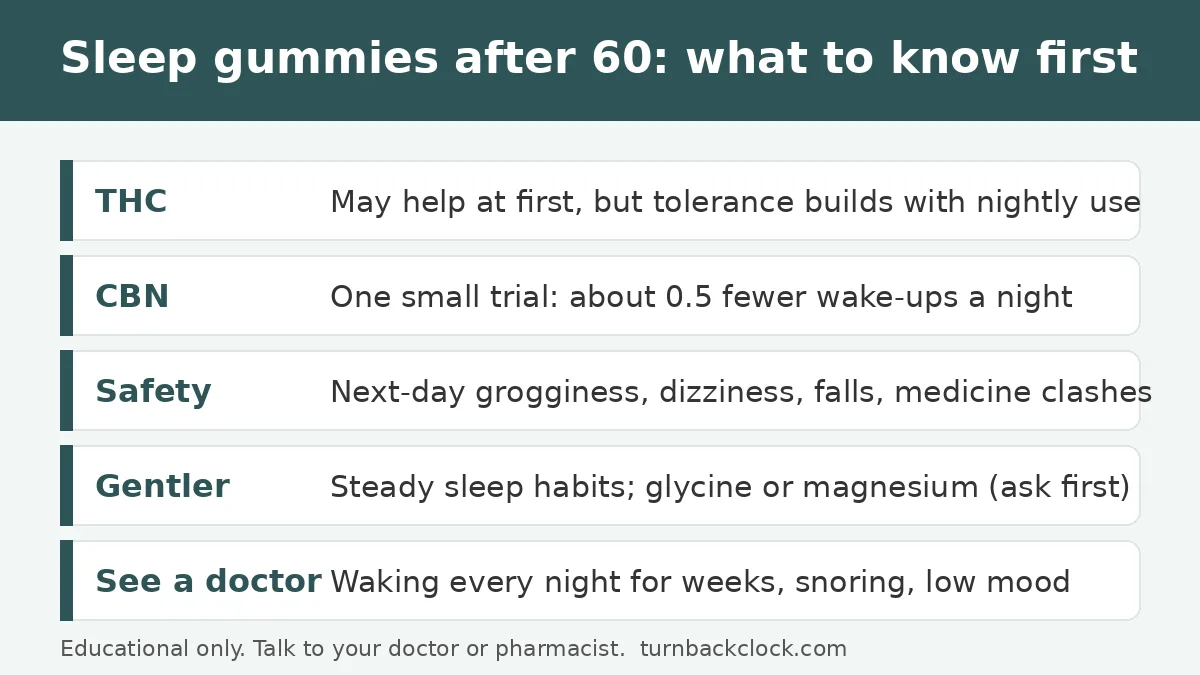
- THC is the part of cannabis that makes you feel “high.” In small amounts it can make you drowsy, and one reader said a single gummy “disrupts the endless thoughts” at bedtime. It also affects balance, memory and reaction time.
- CBD does not make you high. It is sold widely for calm and sleep, but good evidence that it improves sleep on its own is thin.
- CBN forms as THC ages and is often marketed as the “sleep” cannabinoid. Another reader had heard that “to help with sleep they have to have CBN.” The research is still very early, as you’ll see below.
- Glycine and magnesium are not cannabis at all. Glycine is an amino acid found in protein foods, and magnesium is a mineral. They often turn up in the same “sleep gummy” aisle, which adds to the confusion.
What the research says so far
The first placebo-controlled trial of CBN for sleep was published in 2023 in the journal Experimental and Clinical Psychopharmacology. About 300 adults with poor sleep took gummies for seven nights. Those on 20 mg of CBN woke up about half a time less per night than the placebo group, but their overall sleep quality, time to fall asleep and daytime tiredness were not clearly better. Adding CBD did not help. Just as important for us: the volunteers were aged 18 to 55, so nobody over 60 was tested.
Reviews of cannabis products for sleep, including a 2020 systematic review in Sleep Medicine Reviews, reach a similar conclusion: some people report short-term relief, but the studies are small, short and mixed, and there is not enough evidence to recommend them for long-term insomnia.
Why the gummies seem to stop working
That feeling of becoming “resistant” is real, and it has a name: tolerance. When THC is taken every night, the brain’s cannabinoid receptors gradually become less responsive, so the same dose does less. Many people then take a bit more, which raises the next-day risks. When people stop after regular use, sleep often gets worse for a while, sometimes with vivid dreams, before it settles. That rebound can make it feel as if you can’t sleep without them.
Gummies also add a timing problem. Edibles can take one to two hours to kick in and can last six hours or more, so a gummy taken at 10 p.m. may still be working when you get up at 3 a.m. to use the bathroom.
The safety points that matter more after 60
Our bodies handle medicines differently as we get older. We clear them more slowly, we often take several prescriptions, and a stumble at night carries far more health risk than it did at 30. With cannabis gummies in particular, keep these in mind:
- Next-morning grogginess. A “hangover” feeling, slower thinking and unsafe driving the next day.
- Dizziness and falls. THC can lower blood pressure when you stand up and upset your balance. A night-time trip to the bathroom is exactly when falls happen.
- Medicine interactions. THC adds to the effect of other sedating medicines, such as sleeping pills, some antidepressants, anxiety and pain medicines, and alcohol. It can also add to the effect of blood pressure tablets. CBD can change how the liver handles some drugs, including the blood thinner warfarin.
- Hidden strength. Gummies are not always labelled accurately, and some contain more THC than the packet says.
- Rising emergency visits. A 2024 study in JAMA Internal Medicine found that in Ontario, Canada, emergency visits for cannabis poisoning in adults 65 and over roughly tripled after edibles went on sale.
- The law. Rules vary widely. Cannabis gummies are legal for adults in some places, such as Canada and some US states, but illegal in many countries, including Singapore and Japan. Even CBD and hemp products are restricted in some places, and carrying them across borders can get you into serious trouble.
Another reader added a sensible warning about a different bedtime habit: “Just be careful about taking Benadryl.” Older-style sleep aids containing diphenhydramine are generally best avoided after 65 because of grogginess, confusion and fall risk.
Gentler options: glycine and magnesium
Several women in the thread had moved on to simpler supplements. “I also take glycine before bed now,” said one. Another called magnesium glycinate, taken an hour or two before bed, “life changing.” Here is what the evidence suggests:
- Glycine. Small Japanese studies, including one by Yamadera and colleagues in 2007, gave 3 grams before bed and found people rated their sleep as better and felt less sleepy the next day. The studies were small and short, but glycine is generally well tolerated.
- Magnesium. A small 2012 trial of 46 older adults in the Journal of Research in Medical Sciences found that magnesium supplements for eight weeks improved several insomnia measures. Results across studies are mixed, and it seems most helpful for people who don’t get enough magnesium from food. People with kidney problems should not take it without medical advice, and it can affect how some antibiotics and bone medicines are absorbed.
- Food first. Leafy greens, nuts, seeds, beans and whole grains supply magnesium, and protein foods supply glycine.
Even “natural” supplements can clash with medicines, so it is worth a quick word with your pharmacist before you start one.
Sleep habits that work without a gummy
The approach with the strongest evidence for long-lasting insomnia isn’t a pill at all. The American College of Physicians recommends a structured programme called cognitive behavioural therapy for insomnia, or CBT-I, as the first treatment for adults. It is now available through some clinics, books and online courses. Many of its ideas are easy to try at home:
- Get up at the same time every day, even after a poor night.
- Go to bed only when you feel sleepy, not just tired.
- If you’ve been awake for what feels like 20 minutes, get up, sit somewhere dim and quiet, and go back when drowsy.
- Get daylight in the morning and stay active during the day, even with a short walk.
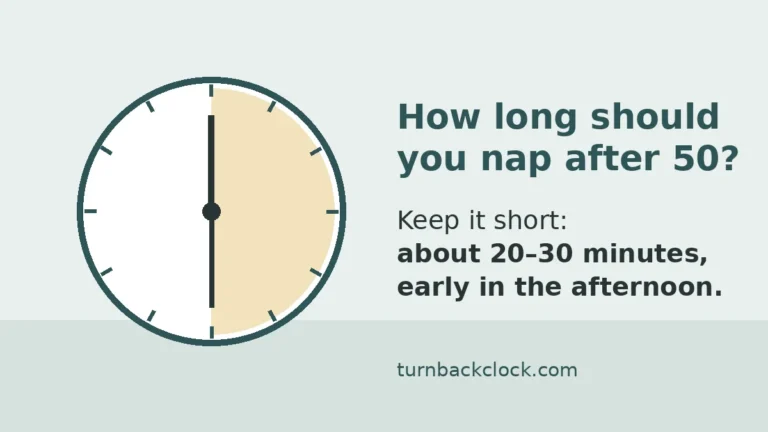
- Keep naps short and early, and cut caffeine after lunch and alcohol in the evening.
- Keep a notepad by the bed for those “endless thoughts,” so they’re on paper instead of in your head.
- Use a soft night light on the way to the bathroom to lower your fall risk.
For more simple habits that support sleep, energy and strength after 50, download our free healthy aging guide.
When waking every night is worth a doctor visit
A clear sleep apnea result is good news, but it doesn’t close the case. Book an appointment if any of these sound familiar:
- You’ve slept poorly at least three nights a week for three months or more.
- You wake several times a night to pass urine.
- Your legs feel restless or jumpy in the evening.
- Pain, heartburn, a cough or breathlessness wakes you.
- You feel low, anxious or worried most days.
- You’ve started a new medicine and your sleep changed.
- You’re so sleepy in the day that driving or concentrating feels unsafe.
Bring a list of everything you take, including gummies and supplements, so your doctor can spot interactions. A week of simple sleep notes helps too.
This article draws on a 2023 randomized trial of CBN in Experimental and Clinical Psychopharmacology, a 2020 systematic review in Sleep Medicine Reviews, a 2024 Ontario study in JAMA Internal Medicine, glycine studies by Yamadera and colleagues (2007), a 2012 magnesium trial in the Journal of Research in Medical Sciences, and the American College of Physicians insomnia guideline. Reader quotes come from a public forum and are shared anonymously.
This article is for general information only and is not medical or legal advice. Please talk with your doctor or pharmacist before trying any sleep product or supplement, especially if you take other medicines, and check the law where you live.
Get the Free Guide
Instantly receive Your Guide to Living 7 Years Longer — practical habits, evidence notes, and clear next steps. Soft mentions of our free longevity tools are inside. No miracle promises.
We’ll never share your email. You can unsubscribe anytime.
Frequently asked questions
Do THC or CBN gummies help you sleep after 60?
Some people find they help for a while, but the research is limited. The first placebo-controlled CBN trial found about half a wake-up fewer per night and no clear change in overall sleep quality, and it tested adults only up to age 55. Benefits often fade with nightly use as tolerance builds.
Why do sleep gummies stop working?
With nightly THC use the brain becomes less responsive, so the same dose does less. Taking more raises next-day grogginess and fall risk, and stopping can cause a few nights of worse sleep before it settles.
Are cannabis gummies safe for older adults?
They carry extra risks after 60, including dizziness, falls, next-morning grogginess and interactions with blood pressure, sedating and blood-thinning medicines. They are also illegal in many countries. Talk to your doctor or pharmacist first.
Is glycine or magnesium a better choice for sleep?
Both are gentler and are not cannabis. Small studies suggest 3 grams of glycine before bed and magnesium supplements may improve how people rate their sleep. Check with your pharmacist first, especially if you have kidney problems or take other medicines.
When should I see a doctor about waking up every night?
If poor sleep happens at least three nights a week for three months, or comes with frequent bathroom trips, restless legs, pain, low mood or heavy daytime sleepiness, it is worth a check-up even if a sleep study ruled out sleep apnea.