If you are waking at 3 a.m., taking longer to fall asleep, or getting up earlier than you used to, you are not imagining it. Sleep often gets shorter and lighter with age. That does not mean a bad night is something you have to accept, and it does not mean a pill or a supplement will fix it.
Older adults still need about the same amount of sleep as other adults, roughly seven to nine hours. What changes is how that sleep is put together. Many people go to bed earlier and wake earlier. Deep sleep tends to shrink, and it is easier to wake in the night. Illness, pain, medicines, and common sleep disorders can pile on top of that. The National Institute on Aging describes this pattern and says better habits, plus treatment when a real sleep disorder is present, are what actually help. For the numbers in plain language, see how much sleep adults over 50 really need.
Start with the clock, not a new product. Go to bed and get up at the same time every day, including weekends. A drifting schedule is one of the fastest ways to make an already lighter sleep even more broken. Pick a wake time you can keep, then protect it.
Give the last hour a job. Read, listen to something calm, or take a warm bath. Keep the bedroom dark enough to sleep, quiet enough that small noises do not pull you up, and neither hot nor cold. Large meals and a lot of liquid close to bedtime make the night busier than it needs to be. The usual guidance is to skip a big meal in the two to three hours before bed.
Move during the day. Regular activity supports sleep, but a hard workout in the last three hours before bed can work against it. Save the intense session for earlier.
If calf or foot cramps are what keep waking you, our guide to easing nighttime leg cramps after 60 has a three-minute bedtime stretch and what to check with your doctor.
What to skip is as useful as what to add.
Skip late caffeine. Coffee, tea, chocolate, and soda later in the day can still be in your system at bedtime. If you wake a lot, move the last cup to earlier in the afternoon and see what a week of that does.
Skip alcohol as a sleep aid. Even a small amount can make it easier to doze off and then fragment the night. It is not a substitute for a steady schedule.
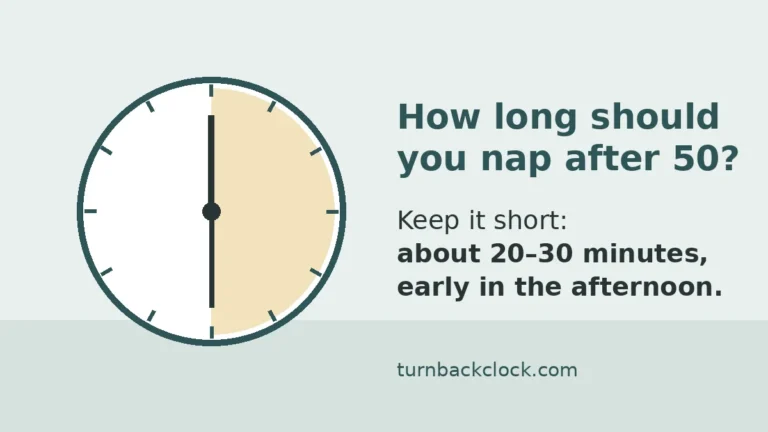
Skip long or late naps. A late-afternoon or evening nap borrows from the night. If you need a nap, keep it earlier and short.
Skip turning the bed into a second living room. Television, a phone, or a tablet in bed trains the brain to stay alert there. If you are awake for a long stretch, get up, do something quiet in dim light, and come back when you are sleepy. Lying there watching the clock usually makes the next night worse.
Skip treating a supplement as the plan. Melatonin is a timing signal your body already makes when it gets dark. It is not a sedative, and it does not replace sleep, food, daylight, or exercise. Talk with your doctor before you start a sleep medicine or a supplement. Sleeping pills can help briefly, and they also carry risks, including next-day fog and dependence. They are not a long-term fix.
Some problems are not a habit problem. Loud snoring, gasping, or feeling exhausted after what should have been enough time in bed can be sleep apnea, which is more common with age and needs a doctor, not a stricter bedtime. A crawling or tingling urge to move the legs at night can be restless legs. Insomnia that shows up at least three nights a week, especially if it lasts more than three months and daytime life is suffering, is worth a proper look. A simple sleep diary for two weeks, noting bed time, wake-ups, caffeine, alcohol, and exercise, gives a clinician something concrete. If you would rather keep a simple daily record on screen, the free Health Habits Tracker can help you stick with one sleep habit.
One habit is enough to start. A fixed wake time is the one most people can keep. The Energy & Vitality Score looks at sleep alongside activity, food, recovery, and stress, so you can see whether sleep is the piece actually dragging your days. It is an educational check, not a lab test and not a diagnosis. Take it here: Energy & Vitality Score.
Better sleep after 50 is mostly boring on purpose. Same wake time, daylight and movement earlier in the day, less caffeine and alcohol later, and a doctor if the night stays broken anyway.
This is general education, not personal medical advice. If sleep stays broken, or you snore, gasp, or feel exhausted after a full night, talk with a qualified clinician.
Get the Free Guide
Instantly receive Your Guide to Living 7 Years Longer — practical habits, evidence notes, and clear next steps. No miracle promises.
We’ll never share your email. You can unsubscribe anytime.