“He wants a full hip replacement… I can’t help but have a bad feeling about the surgery.” That’s how one worried family member opened a conversation on an online aging forum last week. Her father-in-law is 85, lives with Parkinson’s, and his hip and knee pain had become hard to bear. “Has anyone been through this surgery at an advanced age and had success? Or would you go the less invasive route first?” If you, or someone you love, is weighing a hip replacement after 80, this is a calm look at what really decides whether it’s worth it, the questions to ask, and what recovery tends to look like.
First, the happy ending: a week later she posted an update. “He came through the operation just fine. They DID do just the spinal for anesthesia and he’s up and walking.”
Is there an age limit for a new hip?
In short, no. The American Academy of Orthopaedic Surgeons says decisions about joint replacement are based on a person’s pain and disability, not their age. Surgeons now operate routinely on people in their eighties and even nineties, and many do very well. The replies in that forum thread were full of real stories:
- “My grandmother had hers done at 83 and was up shuffling around within a week.”
- “My mother broke both of her hips. The first one at 89 years old and the other when she was 91… Mom just turned 99 years old.”
Not every voice was rosy, and that matters too. One reader warned: “Doctors tend to tell you about [getting through] the surgery but don’t look at the many months of rehab.” Both things can be true. Age alone doesn’t rule you out, but your overall health and your ability to do the rehab work count for a great deal.
What really decides whether it’s worth it
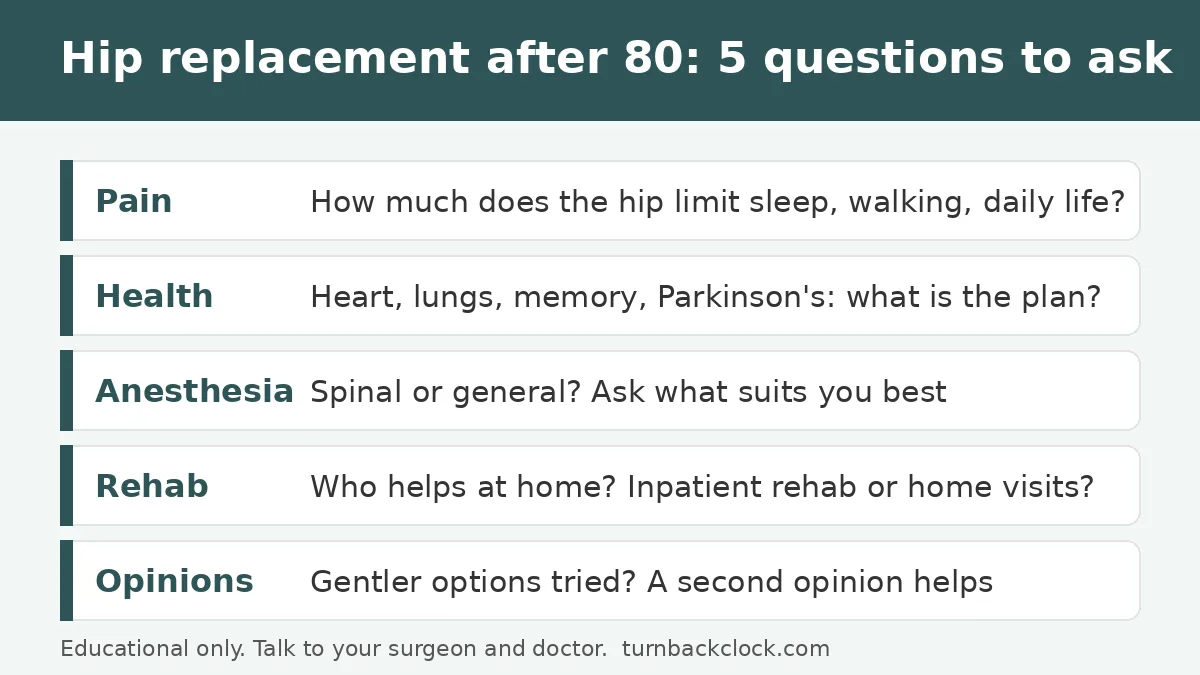
Surgeons and family doctors tend to weigh a handful of things. It helps to think them through before the appointment:
- How much the hip limits your life. Is pain waking you at night? Can you walk to the shops, manage stairs, get in and out of a car? A new hip mainly helps pain and walking, so the more the joint is stealing your days, the bigger the possible gain.
- Whether gentler options have been tried. Pain relief, physiotherapy, a walking stick, weight management and injections are often tried first. If they’re no longer working, surgery becomes more reasonable.
- Your heart, lungs, kidneys and memory. These shape the health risk of any operation. A pre-surgery assessment checks them, and some problems can be improved beforehand.
- Other conditions, like Parkinson’s. People with Parkinson’s can still do well, but they may have a higher chance of falls and slower rehab, so the team needs a clear plan. Parkinson’s charities stress one simple thing: make sure Parkinson’s medicines are given on time in hospital, every time.
- Support at home. Who will help with meals, shopping and getting to appointments for the first few weeks?
Spinal or general anesthesia?
“Spinal is the way to go,” one reader said firmly, and many people feel the same. A spinal numbs you from the waist down, often with light sedation so you doze through the operation, and some people feel clearer-headed afterwards. That said, the evidence is more balanced than the folklore. A large trial called REGAIN, published in the New England Journal of Medicine in 2021, compared spinal and general anesthesia in about 1,600 adults aged 50 and over having hip fracture surgery. Walking ability at 60 days and rates of post-operative confusion (delirium) were similar with either approach.
So the best choice depends on you: your heart, your back, any blood thinners you take, and how you’ve coped with anesthesia before. Ask to speak with the anesthetist, and tell them about any past confusion after surgery.
Questions to ask before you say yes to a hip replacement after 80
- What do you expect this operation to improve for me: pain, walking, sleep?
- What are my personal health risks, given my heart, lungs, memory and other conditions?
- Would you suggest spinal or general anesthesia for me, and why?
- How many hip replacements do you and this hospital do each year for people my age?
- How will my regular medicines be handled in hospital, including timed doses?
- How long will I likely stay, and will I go home or to a rehab unit?
- What exercises should I start now to prepare?
- What happens if I wait six months or a year instead?
A second opinion is perfectly normal and no good surgeon will mind. As one reader put it after her own experience: “Moving forward, I’m going to get three opinions before I have any surgery.”
Getting stronger before surgery
Many hospitals now offer “prehab,” a few weeks of gentle exercise before the operation. Reviews of the research suggest it can modestly improve strength and function going in, and people who are stronger beforehand often find the early days of rehab easier. Ask your surgeon or physiotherapist what’s safe for you. Common examples include:
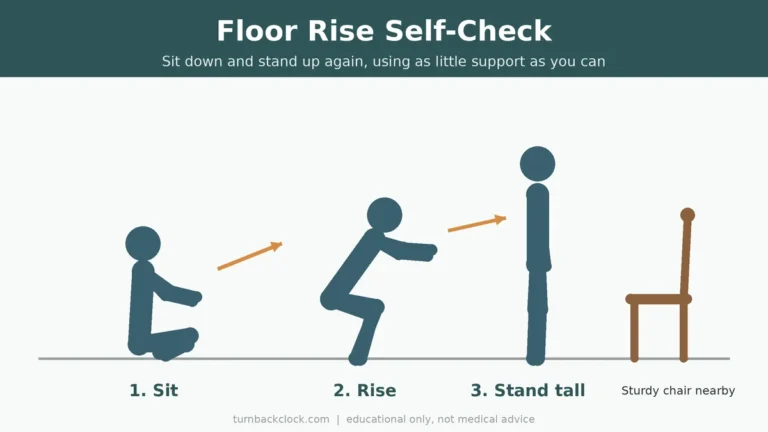
- Sit-to-stand practice from a firm chair, using your hands as needed.
- Seated leg lifts and ankle pumps.
- Short, regular walks with your stick or frame, if the pain allows.
- Arm strength work, since you’ll lean on a frame or crutches afterwards.
- Practising getting in and out of bed and a car the way your physio shows you.
It’s also a good time to set up the home: clear rugs and clutter, put a night light on the way to the bathroom, raise the toilet seat if advised, and move everyday items to waist height.
What recovery usually looks like
Everyone is different, and recovery is often slower in our eighties, but the NHS gives a rough guide that matches many readers’ experience:
- Day one or two: standing and taking a few steps with a frame and a physiotherapist. That surprises many families.
- First few weeks: walking with a frame or crutches, daily exercises, help at home with washing, meals and shopping.
- Around six weeks: many people manage most light daily activities and may move to a walking stick.
- Three months to a year: continued gains in strength, confidence and walking distance as the muscles rebuild.
That reader who warned about “many months of rehab” wasn’t wrong. The exercises are the part that turns a new joint into a better life, so it helps to plan for them in advance, not just for the operation day.
For simple daily habits that support strength, balance and energy after 50, get our free healthy aging guide.
This article draws on patient guidance from the American Academy of Orthopaedic Surgeons and the NHS, the REGAIN trial of spinal versus general anesthesia (New England Journal of Medicine, 2021), research reviews on pre-surgery exercise, and Parkinson’s charity guidance on medicine timing in hospital. Reader quotes come from a public forum and are shared anonymously.
This article is for general information only and is not medical advice. Every person’s situation is different. Please talk with your surgeon, family doctor and physiotherapist about whether hip surgery is right for you.

Get the Free Guide
Instantly receive Your Guide to Living 7 Years Longer — practical habits, evidence notes, and clear next steps. Soft mentions of our free longevity tools are inside. No miracle promises.
We’ll never share your email. You can unsubscribe anytime.
Frequently asked questions
Is 85 too old for a hip replacement?
Not automatically. Orthopaedic guidance says decisions are based on pain, disability and overall health rather than age. Many people in their eighties and nineties have successful hip replacements, but heart, lung and memory health and the ability to do rehab all matter.
Is spinal anesthesia safer than general for older adults?
Many people prefer a spinal, but a large 2021 trial (REGAIN) in adults 50 and over having hip fracture surgery found similar walking recovery and similar rates of post-operative confusion with spinal or general anesthesia. The best choice depends on your health, so ask the anesthetist.
How long does recovery take after hip replacement in your 80s?
Most people stand and take a few steps within a day or two, use a frame or crutches for several weeks, and manage most light daily activities by around six weeks. Strength and confidence often keep improving for up to a year.
Can someone with Parkinson’s have a hip replacement?
Yes, many do. The team should plan for a higher chance of falls and slower rehab, and Parkinson’s medicines must be given on time in hospital. Ask about this before surgery.
What can I do before hip surgery to recover better?
Ask your physiotherapist about prehab: gentle sit-to-stands, leg and arm exercises and short walks. Also prepare your home by removing trip hazards and arranging help for the first few weeks.