
This free check uses the CDC STEADI 4-Stage Balance Test, a progressive standing-balance assessment from the CDC’s fall-prevention toolkit. You try four standing positions with your eyes open, without a cane or walker, and aim to hold each for 10 seconds. It takes about 2–3 minutes.
How to do the test
- Wear flat, sturdy shoes (or go barefoot if that is safer for you).
- Try four standing positions in order. For each one, hold still for 10 seconds without moving your feet or needing support.
- You may hold your arms out or move your body for balance, but do not move your feet or grab support.
- If you cannot hold a position for 10 seconds, stop. Do not continue to harder positions.
- The four positions are:
- Feet side-by-side — stand with feet together.
- Semi-tandem — place the instep of one foot so it touches the big toe of the other.
- Tandem — place one foot directly in front of the other, heel touching toe.
- One foot — stand on one foot (extra challenge if you passed tandem).
Interactive test
Stage 1 of 4: Feet side-by-side
Stand with your feet together. Press Start when you are ready, then hold for 10 seconds.
Or enter seconds you held (if you timed yourself)
Enter 0–10+ for each stage you tried. Leave later stages blank if you stopped early.
Related: Want the full picture? See Simple Home Tests to Check Your Strength and Balance After 50 — chair stand, balance and mobility checks you can do in about 10 minutes.
Feeling clumsier or dropping things lately? Pair this test with our guide to rebuilding grip strength after 70, including the stand-on-one-foot toothbrush habit.
Get the Free Guide
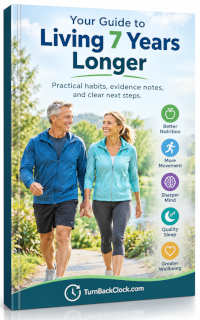
Instantly receive Your Guide to Living 7 Years Longer — practical habits, evidence notes, and clear next steps. No miracle promises.
We’ll never share your email. You can unsubscribe anytime.
How the scoring works
CDC’s STEADI 4-Stage Balance Test uses a clear cutoff on the tandem stand (one foot directly in front of the other):
- If you can hold the tandem stand for at least 10 seconds, this CDC cutoff does not flag increased fall risk on this test.
- If you cannot hold tandem for 10 seconds, CDC indicates an increased risk of falling. That is not a diagnosis, but it is worth talking with a clinician or physical therapist about a fuller balance check and safe practice.
- Stage 4 (one-leg stand) is an extra challenge if you passed tandem. Completing it is a good sign of stronger balance, but the official CDC cutoff for this screening tool is the tandem stance.
Source: Centers for Disease Control and Prevention, STEADI Assessment: 4-Stage Balance Test (PDF). See also STEADI clinical resources.