Short answer: losing some grip strength after 70 is common, and so is the clumsy feeling that comes with it: dropped cups, fumbled keys, jars that will not budge. The good news is that hands and balance both respond to practice. A few tiny daily habits, three simple at-home grip moves and some clever kitchen helpers can make a real difference. A sudden change is different, though, and needs a doctor quickly. This guide is educational only, not personal medical advice.
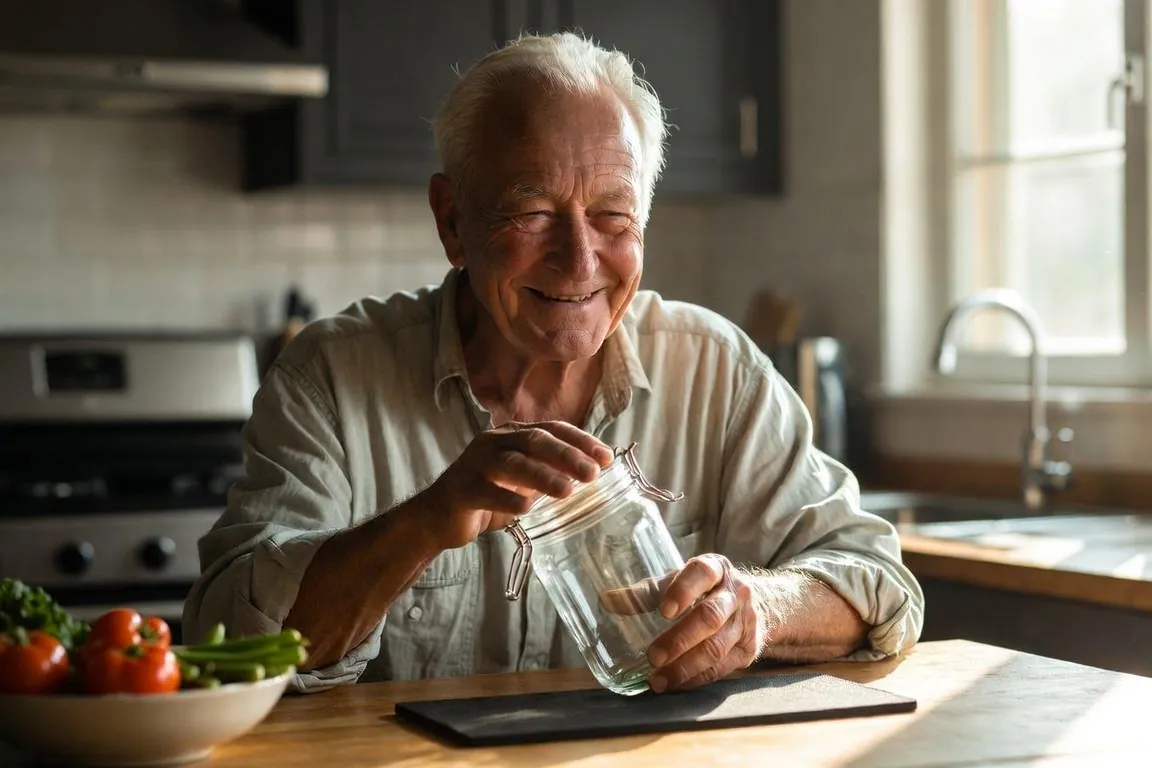
“Just turned 70 a few weeks ago and have noticed that I am becoming more clumsy. In the past few months I’ve started dropping things and knocking stuff over more than I ever have before, and it’s starting to worry me a little.” Another woman in the same online group for women over 60 wrote: “At 70 my hand strength is waning. For kitchen chores what helps?” Many readers in their sixties and seventies said the same, and the ideas that helped them line up well with the research.
Why you may feel clumsier and drop things at 70
Hand strength tends to peak somewhere in our thirties or forties and then drift down slowly, often more noticeably from our sixties onward. Several things usually stack together:
- Less muscle in the forearms and hands. The gradual loss of muscle with age (sarcopenia) affects the small muscles that close your fingers, not just your legs.
- Stiffer joints. Arthritis in the fingers or thumb base can make it harder to wrap your hand around a mug or twist a lid.
- Less sensitive fingertips. Touch and position sense fade a little, so your hand gets less feedback about how firmly it is holding something.
- Eyes, hurry and multitasking. Glare, the wrong glasses, carrying too much at once or rushing make slips more likely at any age.
- Balance. “Knocking things over” is often a whole-body issue: a small sway or misjudged step sends an elbow into the glass.
Hand grip strength is also something researchers use as a simple marker of overall strength and vitality in older adults, which is one more reason to look after it.
Get the Free Guide
Instantly receive Your Guide to Living 7 Years Longer — practical habits, evidence notes, and clear next steps. No miracle promises.
We’ll never share your email. You can unsubscribe anytime.
First: when a change needs a doctor quickly
Gradual change over months or years is usually the slow kind described above. A sudden change is different. Call your local emergency number (911 in the US) right away if you or someone with you has any of these, even if they pass quickly:
- Sudden weakness, numbness or clumsiness in the face, arm or leg, especially on one side of the body
- Sudden trouble speaking, slurred speech or confusion
- Sudden trouble seeing, dizziness or loss of balance
- A sudden severe headache with no known cause
The US CDC uses the reminder B.E. F.A.S.T. (Balance, Eyes, Face, Arms, Speech, Time) for these warning signs, and fast care matters.
Book a regular appointment if you notice tingling or numbness in your fingers (often worse at night), weakness that is getting steadily worse, a new tremor, painful or swollen finger joints, or more trips and falls. Nerve pressure in the wrist, such as carpal tunnel syndrome, is common, can make people drop things, and is very treatable. Your doctor can also refer you to an occupational therapist or hand therapist, who are experts in exactly this.
Tiny daily balance habits
- Stand on one foot while you brush your teeth. Several readers swear by this one. Stand close to the counter, rest a fingertip on it if you need to, and lift one foot a little off the floor. Swap feet halfway through. The US National Institute on Aging lists standing on one foot among its simple balance exercises.
- Use the handrail every time, whether you feel you need it or not.
- Carry less, and use two hands. Make two trips with the shopping, carry mugs half full, and use a tray or a bag with handles.
- Slow down at doorways and turns, where most bumps and spills happen.
Want a baseline? Try the free 4-Stage Balance Test with a chair or counter nearby, and see our guide on how often to practise balance exercises.
Three at-home moves to rebuild your grip
A review of 24 exercise studies in more than 3,000 healthy adults aged 60 and over found that training led to small but real gains in hand grip strength (Labott et al., 2019, PMID 31499496). Another review found that strength training still builds muscle strength in people aged 75 and older, including the over-80s (Grgic et al., 2020, PMID 32740889). You do not need a gym. Do these two or three times a week, gently, and stop if anything hurts.
1. Soft-ball squeeze
- Hold a soft stress ball, a tennis ball or a rolled pair of socks in one hand.
- Squeeze slowly as firmly as is comfortable, hold for 3 to 5 seconds, then relax your fingers fully.
- Repeat 10 times, then switch hands. If your joints are sore, use something softer and squeeze more gently.
2. Towel wring
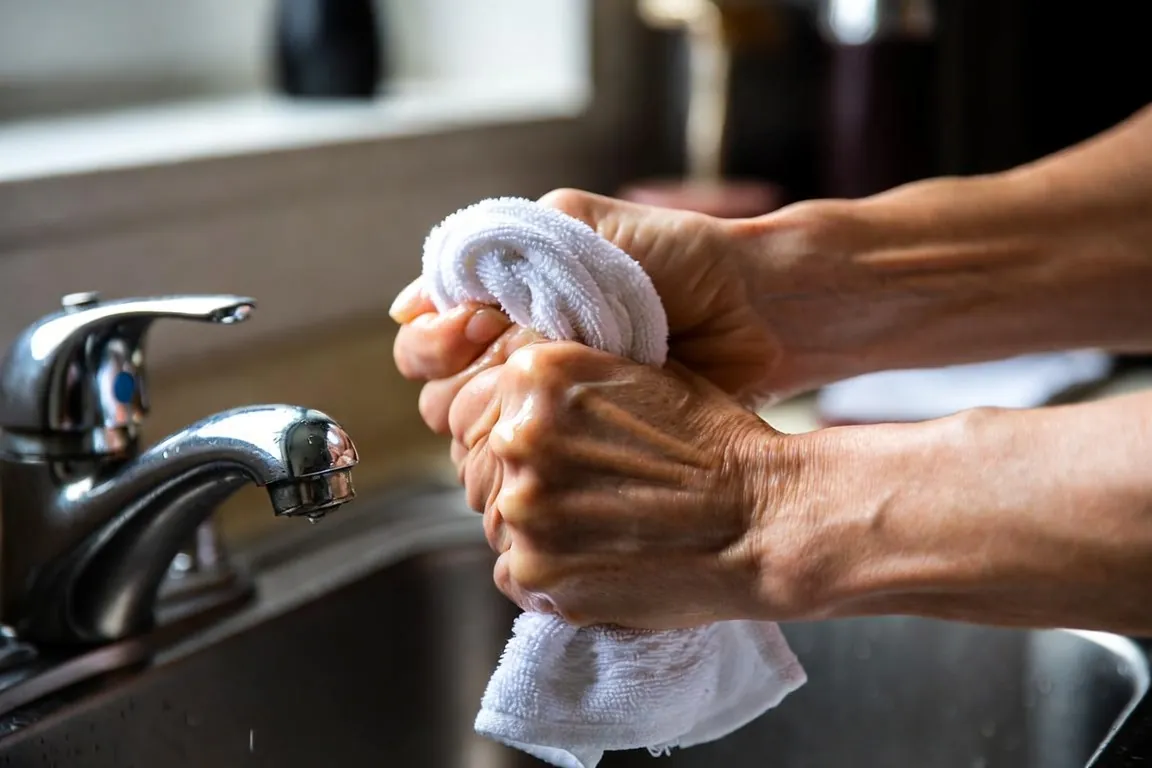
- Roll a small hand towel into a tube. A dry towel is fine; a damp one over the sink adds a little resistance.
- Hold it in front of you with both hands, like a bicycle handlebar.
- Twist your hands in opposite directions, as if wringing out water, for 3 to 5 seconds.
- Untwist, then wring the other way. Do 5 to 8 twists each direction.
3. Light farmer carry
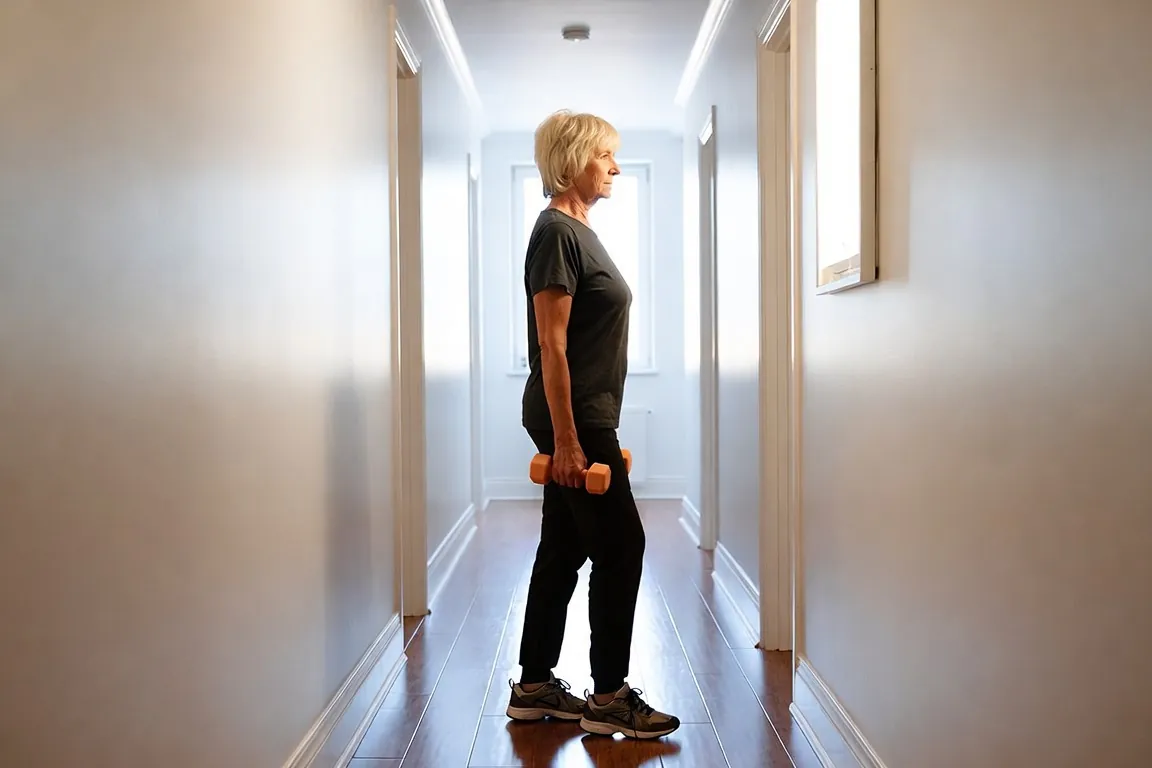
- Hold a light weight in each hand at your sides: small dumbbells, two filled water bottles, or shopping bags with a few cans.
- Stand tall, shoulders relaxed and down, and walk slowly for 20 to 30 seconds in a clear hallway.
- Set the weights down, rest, and repeat 2 or 3 times. Keep the path clear of rugs and stay near a wall or counter.
Add weight slowly over weeks, never all at once. If you have heart, shoulder or hand problems, or have had recent surgery, check with your doctor or a physical therapist before starting.
Kitchen helpers that save your grip
- Rubber gloves or a square of shelf liner give you a grippier hold on stubborn jar lids.
- A jar opener (under-cabinet or hand-held) does the twisting for you. A gentle tap of the lid edge on the counter or running it under warm water can help too.
- Lighter mugs with big handles and plates you can lift easily cut down on drops.
- Thicker handles. Foam tubing slipped over cutlery and kitchen tools makes them easier to hold.
- Store heavy items between waist and shoulder height so you are not reaching overhead or bending low with a load.
Using helpers is not “giving in”. It saves your joints for the exercises that build strength.
Strong hands work best with strong legs
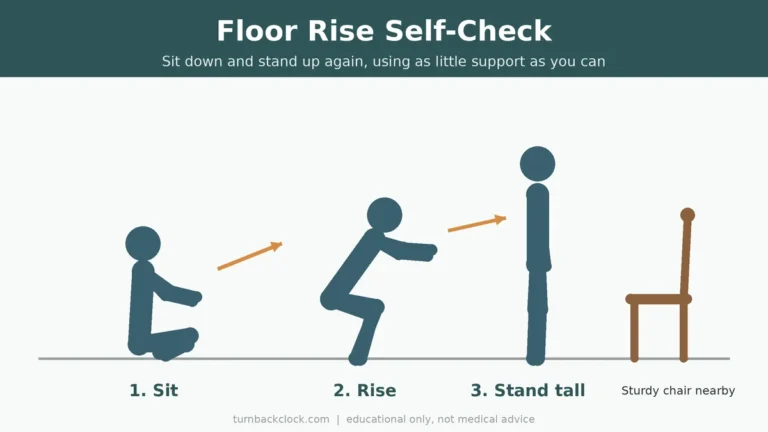
Grip and balance improve faster when the whole body is getting stronger. Check your leg strength with the 30-Second Chair Stand Test or do both checks with our home strength and balance tests. Then build from there with how to regain muscular strength after 50, the 3 chair exercises for better balance, and our plan for when stairs are getting harder after 70.
Log your grip and balance sessions in the free Health Habits Tracker so the small daily habits stick. For a wider picture, try the Longevity Score Calculator or the Biological Age Calculator, give your brain a workout with Memory Gym 50+, or browse all our free health tools. Our free Guide to Living 7 Years Longer pulls the key habits together.
FAQ: grip strength after 70
Is it normal to drop things more at 70?
Some loss of hand strength and dexterity is common with age, so an occasional fumble is not unusual. A sudden change, or one-sided weakness or numbness, is not normal and needs urgent medical care.
Can you still improve your grip at 70 and beyond?
Yes. Studies in adults over 60, and strength studies in people over 75, show that regular exercise can improve strength. Gains in grip are usually modest but noticeable in daily life.
How often should I do grip exercises?
Two or three short sessions a week is a sensible start, with a rest day in between. Stop if you feel pain, and ask a doctor or hand therapist if you have arthritis or past hand injuries.
What helps with jars and packaging?
Rubber gloves, shelf liner, a jar opener, thicker tool handles and lighter mugs all reduce the strain on your hands.
Sources
- Labott BK, et al. Effects of exercise training on handgrip strength in older adults: a meta-analytical review. Gerontology. 2019. PMID 31499496
- Grgic J, et al. Effects of resistance training on muscle size and strength in very elderly adults: a systematic review and meta-analysis of randomized controlled trials. Sports Med. 2020. PMID 32740889
- US CDC. Signs and symptoms of stroke (B.E. F.A.S.T.). cdc.gov
- National Institute on Aging. Three types of exercise can improve your health and physical ability. nia.nih.gov
- Mayo Clinic. Carpal tunnel syndrome: symptoms and causes. mayoclinic.org
Disclaimer: TurnBackClock.com shares educational information for adults 50+. Nothing here is medical advice, a diagnosis, or a treatment plan. Talk with your doctor about any new or worsening weakness, numbness or clumsiness, and before starting a new exercise routine.